Deviant Anomalies
Play Deviant Anomalies
Deviant Anomalies Screenshots




















Deviant Anomalies review
An in-depth walkthrough, insights, and player tips for Deviant Anomalies
Deviant Anomalies is a narrative-driven adult game that mixes visual-novel storytelling with character recruitment, minigames, and progression mechanics — making it important to understand both story paths and gameplay systems early on. This guide dives into core mechanics, step-by-step walkthroughs for key quests, tips for character interactions and stats management, and my direct playing experience to help you get consistent outcomes and unlock major content. Whether you want to optimize recruitment, complete mini-games efficiently, or explore the branching storylines, this article lays out actionable strategies and scene-specific advice.
Gameplay Basics and Interface
Let’s be honest: when you first boot up Deviant Anomalies, it can feel like you’ve been handed the controls to a spaceship with no manual. 😅 The interface is packed with icons, your character sheet has more meters than a science lab, and you’re probably wondering what on earth you’re supposed to do first. Don’t worry, we’ve all been there. This chapter is your friendly co-pilot, here to demystify the core gameplay systems and turn that initial overwhelm into confident control. Mastering these Deviant Anomalies mechanics early is the single best thing you can do to ensure a smooth, enjoyable, and deeply rewarding playthrough.
How the core mechanics work
At its heart, Deviant Anomalies is a narrative-driven game where your choices and management of resources directly shape the story and your relationships. Think of it as part visual novel, part life-sim, with a dash of strategic planning. 🎮 The core loop involves exploring the game world (usually via a map), interacting with characters at specific times and places, and managing your protagonist’s physical and emotional state to unlock new story beats.
The most fundamental of the Deviant Anomalies mechanics is the Time and Location system. The game world operates on a clock, divided into time blocks like Morning, Afternoon, Evening, and Night. Many events, character encounters, and job opportunities are only available during specific windows. Choosing to visit the “College Campus” in the Afternoon might yield a completely different scene than visiting at Night. This makes planning your day essential.
Then there’s the Choice and Consequence engine. Dialogue and action choices aren’t just for flavor; they actively raise or lower hidden flags, lock or unlock future paths, and alter how characters perceive you. There’s rarely a single “right” choice, but rather choices that align with the kind of story you want to experience. The game excels at making these consequences feel organic, often revealing how a small decision hours earlier paved the way for a major scene.
Finally, Progression Gates are managed through a combination of story milestones, character relationship levels, and your stats. You can’t just brute-force your way to every scene. You might need a certain level of intimacy with a character, a specific item in your inventory, or to have witnessed a prior event at a different location. This layered approach to the Deviant Anomalies mechanics creates a satisfying sense of discovery and achievement as you piece together the requirements to advance your goals.
Stats, resources and how they influence outcomes
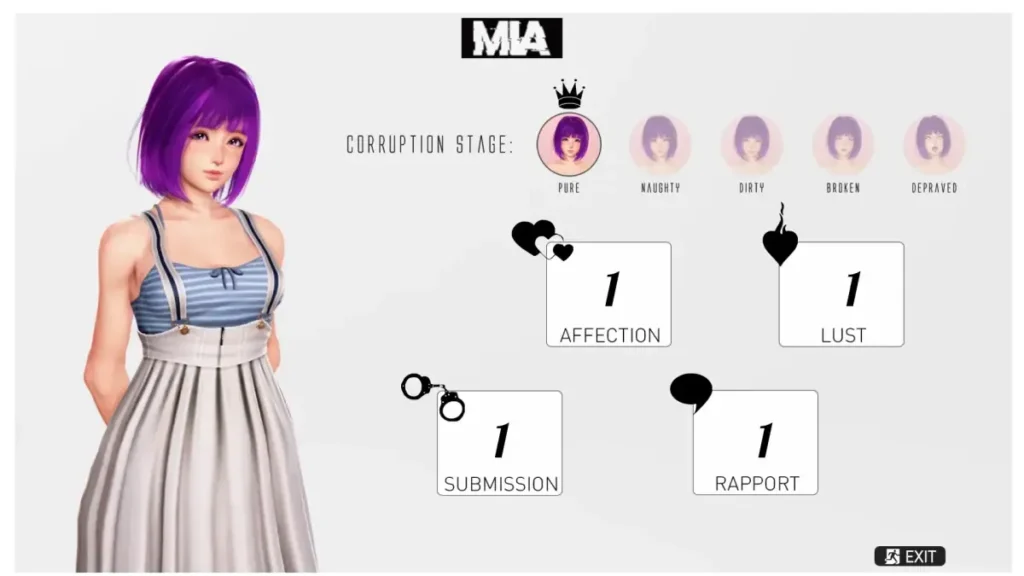
This is where the rubber meets the road. Your character isn’t just a blank slate; they’re a living persona with needs, desires, and limits, all quantified by a set of core stats. Understanding this is the heart of any effective Deviant Anomalies stats guide. These stats influence everything from dialogue options and scene availability to your success in intimate moments.
Let’s break down the key attributes you’ll be managing:
| Stat Name | What It Represents | Common Ways to Raise/Lower | Primary In-Scene Effects |
|---|---|---|---|
| Pleasure | The character’s current state of physical satisfaction and arousal. | Raised by successful intimate actions, certain items. Lowered by scene conclusions or specific choices. | Higher levels unlock more intense and advanced intimate options during sequences. Essential for achieving “peak” moments. |
| Shame | The internalized sense of embarrassment or social taboo. | Raised by choosing bold/public actions or failing social checks. Lowered by private encounters, supportive dialogue, or consumable items. | High Shame can lock out daring options, cause early scene termination, or influence character dialogue towards guilt. Low Shame enables bolder paths. |
| Sensitivity | Physical responsiveness and receptiveness to stimulation. | Raised gradually through successive intimate contact. Can be temporarily boosted by items or environmental factors. | Directly affects the rate at which Pleasure increases. High Sensitivity makes characters reach climax faster, which can be good or bad depending on your goal. |
| Progress (G-Spot) | A cumulative meter tracking advancement toward a character’s main intimate milestone or story climax. | Fills slowly across multiple successful interactions and scenes with a specific character. Requires meeting Pleasure/Sensitivity thresholds. | When maxed, it triggers major character-specific story scenes and is key to “recruiting” or fully bonding with that character. It’s a long-term relationship tracker. |
Beyond these personal stats, you must manage key resources:
* Money (Credits): 🤑 Earned primarily through the part-time job mini-game (found on the map). This gates access to clothing, important items from shops, and sometimes entry to special locations.
* Energy: Your daily stamina. Most significant actions (job, training, lengthy social interactions) cost energy. Once depleted, you’re often forced to rest/sleep to advance time.
* Items: These range from consumables that adjust stats (e.g., a drink to lower Shame) to key story objects required to trigger certain time of day events Deviant Anomalies.
My Pro Tip: Don’t ignore Shame in the early game! I once focused solely on Pleasure, only to hit a narrative wall where my character was too embarrassed to pursue deeper connections. A balanced approach is best.
Navigation, save strategy and UI tips
A cluttered interface can be the biggest barrier to fun. Let’s translate that screen into actionable game interface tips. Your central hub is the Main Map. This is your go-to for virtually all navigation. It shows all available locations, and crucially, icons will often appear signaling an active event or character presence there. A small clock on the map reminds you of the current time block.
The Top Bar is your constant dashboard. Glance here to see your current Money, Energy, and the time of day. The Menu Button (often in a corner) is your gateway to everything else: Inventory, Character Profiles, the Settings/Options menu, and most importantly, the Save/Load screen.
Speaking of saving, let’s talk about a rock-solid save strategy Deviant Anomalies. This game is built on branching paths, and a single autosave is a recipe for disaster. Here is my ironclad routine:
- Multiple Manual Save Slots: Use them! I maintain three rotating manual saves that I overwrite in sequence (Save 1, then 2, then 3, then back to 1). This gives me a safety net several steps back.
- Save Before Any Major Choice: Branching dialogue, agreeing to meet someone later, or entering a new location for the first time? Save.
- Save After Achieving a Milestone: Completed a big scene, raised a stat significantly, or earned a lot of money? Save.
- Time Block Saves: I often make a dedicated “Morning Start” save at the beginning of each new in-game day. This makes it easy to replay a day differently if I discover I missed a key time of day event Deviant Anomalies later.
The pain of not doing this is real. On my first playthrough, I had a perfect evening scene with a character, failed a tricky dialogue check right at the end, and was hit with a catastrophic rejection that locked me out of their path. Because I’d only been relying on autosave, I had to replay over two hours of gameplay. Never again! Now, my split-save discipline is non-negotiable. 😤
Other Essential UI Insights:
* Character Profiles: Access these from the menu. They’re your best Deviant Anomalies stats guide for individual characters, showing your current Progress (G-Spot) meter with them and often hinting at what they like.
* Quest Log/Pending Events: Pay close attention to this. It doesn’t always hold your hand, but notes like “X asked to see you at the Park in the Evening” are your primary guide for missable content.
* Accessibility & Settings: Dive into the options! You can often adjust text speed, enable auto-advance for dialogue, and skip previously read text—a lifesaver for replays. Some versions also have a helpful “History” log to review recent dialogue if you clicked too fast.
Recommended Early-Game Pacing:
Don’t rush. The first 5-10 hours are about exploration and learning. Talk to everyone, visit every location at different times, and experiment with the job system. A typical early-game loop might be: Check map for event icons -> Spend energy on a money-making or stat-building activity -> Use remaining energy to follow up on a character hint -> Rest to advance time. This sets a strong foundation without hitting dead ends. As for replayability, it’s enormous. With its web of choices, stats, and time of day events Deviant Anomalies, seeing all the content requires multiple, very different playthroughs.
By internalizing these Deviant Anomalies mechanics, understanding your stats, and mastering the interface with a vigilant save strategy Deviant Anomalies, you transform from a passive viewer into an empowered director of your own unique story. Now, you’re ready to dive deeper.
Deviant Anomalies rewards careful planning, patient stat management, and willingness to experiment with choices. Use the save practices, recruitment checklists, and quest walkthroughs above to avoid missable content and to steer scenes toward your preferred outcomes. For deeper play, try the advanced replay strategies and community tools to customize pacing and accessibility. If you found a hidden branch or a better way to complete a recruitment path, try it on a new save slot and share your findings with other players to help expand collective knowledge.