
Guardians of Eden Screenshots

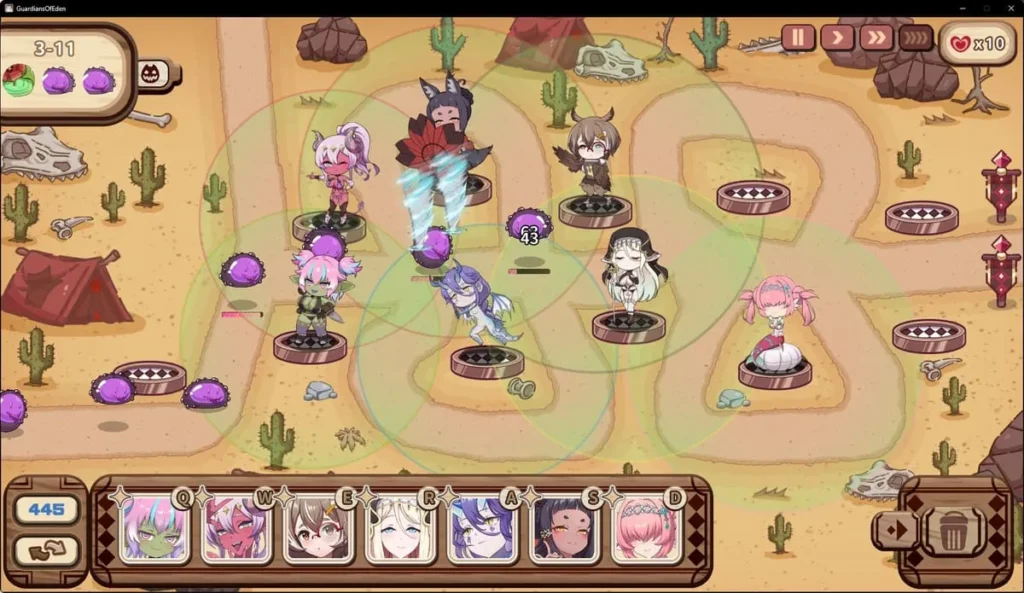
Guardians of Eden review
Explore gameplay mechanics, features, and what makes this adventure title unique
Guardians of Eden stands out as a distinctive adventure experience that combines exploration, character interaction, and environmental storytelling. Originally released as one of the earliest games to support SVGA graphics, this title has maintained a dedicated following among adventure game enthusiasts. Whether you’re a longtime fan revisiting the game or a newcomer curious about classic adventure titles, understanding the core mechanics and narrative elements helps you appreciate what makes this game memorable. This guide covers everything from gameplay fundamentals to character dynamics and technical achievements that defined the experience.
Gameplay Mechanics and Core Features of Guardians of Eden
Let’s be honest, sometimes diving into a new adventure game can feel a bit intimidating. 🗺️ You’re handed a world, a cast of characters, and a mystery, but the “how” of it all—the actual moment-to-moment Guardians of Eden gameplay—is what truly makes or breaks the experience. Will it be a tedious click-fest, or a captivating journey where every interaction matters?
Well, I’m here to tell you that Guardians of Eden masterfully falls into the latter category. Having played through its rich, 13-chapter story more times than I’d like to admit, I can confidently say its core adventure game mechanics are a beautifully woven tapestry of exploration, conversation, and deduction. It’s a game that respects your intelligence and rewards your curiosity. So, grab your virtual notebook, and let’s peel back the layers on what makes this adventure tick.
How Does the Adventure Unfold in Guardians of Eden?
Unlike open-world games that can sometimes leave you feeling directionless, Guardians of Eden employs a classic yet refined chapter-based structure. Think of it as a gripping novel you get to live inside. The game is divided into 13 distinct narrative progression chapters, each acting as a self-contained episode with its own mood, primary locations, and key revelations, while steadily building the overarching plot.
The pacing here is superb. You’re never stuck in one place for too long, and the game expertly balances quiet, investigative moments with tense, story-driven crescendos. I remember starting Chapter 4, “The Whispering Gallery,” expecting a simple exploration of an old museum. Instead, the atmosphere slowly tightened around me, with every solved puzzle solving adventure element unveiling a darker piece of history that directly impacted my understanding of protagonist Jason’s quest. This is the game’s magic: every chapter advances the plot while deepening character and world-building.
Your primary tool for narrative progression chapters is the classic point-and-click interface, but polished to a shine. You examine, you pick up, you combine items in your inventory, and you talk to everyone. But the real genius is in how these actions are tied directly to character motivation. You’re not just collecting a random key because a door is locked; you’re piecing together a colleague’s research notes to locate a hidden safe whose combination is etched into a monument you saw three chapters prior. The logic feels authentic, and solutions satisfy that “aha!” moment every fan of environmental exploration games craves.
To give you a clear roadmap of this journey, here’s a breakdown of how the story and gameplay evolve:
| Chapter | Title | Key Story Beat & Objective | Character Focus |
|---|---|---|---|
| 1 | The Last Transmission | Arrive at the remote Eden research station; find the source of a distress call. | Jason (Protagonist) introduced. |
| 2 | Echoes in the Hall | Explore the abandoned main lab; discover evidence of a sudden, strange evacuation. | First hints of Maya’s research. |
| 3 | The Green Wall | Venture into the biosphere dome; confront the first signs of rampant, mutated flora. | Introduction of Dr. Aris’s logs. |
| 4 | The Whispering Gallery | Investigate the cultural archive; decode ancient symbology linked to the station’s purpose. | Deepens Maya’s backstory and motivations. |
| 5 | Roots of Discord | Access the restricted botanical labs; learn about the “Genesis Seed” project. | Tension between Jason and revealed character, Kael. |
| 6 | Heart of the Canopy | Navigate the treacherous upper canopy of the biosphere; retrieve a key bio-sample. | Team dynamics tested; first major choice affecting morale. |
| 7 | Beneath the Soil | Descend into the geothermal sub-levels; discover the true, ancient source of the phenomenon. | Revelation about the station’s founding. |
| 8 | Fractured Alliance | Confrontation in the comms center; decide who to trust as factions become clear. | Pivotal **dialogue choices impact** relationships permanently. |
| 9 | The Guardian’s Path | Follow the path of the station’s namesake “Guardians”; solve their ecological trials. | Jason’s personal connection to the mystery deepens. |
| 10 | Primal Bloom | Contain a catastrophic biological breach in the central core. | High-stakes **puzzle solving adventure** under time pressure. |
| 11 | Truths and Sacrifices | Uncover the final logs and face the consequences of the project’s failure. | Maya’s full story and Jason’s pivotal decision. |
| 12 | The Eden Directive | Activate (or disable) the station’s final protocol; navigate the culminating environmental puzzles. | Climax of all **environmental exploration games** mechanics. |
| 13 | Legacy | Epilogue chapter; witness the long-term outcomes of your choices. | Resolution for all major characters based on your actions. |
Character Interaction and Dialogue Systems
If the chapters are the bones of the game, then its character interaction systems are the beating heart. This isn’t a game where you just exhaust dialogue trees to get a key item. Every conversation is a tool for investigation, character development, and narrative shaping.
At the center of it all is your relationship with your missing colleague, Maya. You piece her together through found logs, personal effects, and the memories of others. The game brilliantly makes finding Maya as important as understanding her, and your perception of her directly influences Jason’s actions. One playthrough, I viewed her as a reckless genius; another, as a tragic hero. The evidence supports multiple readings, which is a testament to the sophisticated writing.
The live character interaction systems with NPCs you meet, like the pragmatic security chief Kael or the idealistic botanist Lin, are where your agency truly shines. The dialogue choices impact is tangible and multifaceted. You’re not just picking “Good,” “Neutral,” or “Bad” responses. Instead, you choose your investigative approach: are you confrontational, empathetic, logical, or deceptive? 🎭
Pro Tip: Pay close attention to character bios and previous conversation notes in your journal. An NPC might withhold crucial information if you earlier dismissed their theories, but they could become a valuable ally if you showed respect for their work.
I learned this the hard way. In my first run, I brushed off Kael’s security concerns as paranoia. Later, when I needed his help to access a high-security area, he remembered my attitude and made the process… difficult. On a second playthrough, by valuing his perspective, I unlocked an entirely optional scene that gave me a better weapon and a clearer picture of the station’s collapse. This isn’t just flavor text; it’s functional, integrated Guardians of Eden gameplay.
The dynamics between characters also evolve based on your actions. Your choices can mend friendships or sow discord within the small group of survivors you encounter. These relationships open or close pathways in the story, making certain areas easier or harder to navigate, and even determining who, if anyone, stands with you at the climax. It creates a profoundly personal experience where your dialogue choices impact the world in a credible, satisfying way.
Environmental Exploration and Puzzle Solving
The world of Guardians of Eden is a character in itself. The derelict station, seamlessly blending futuristic tech with overwhelming organic overgrowth, is a constant source of wonder and unease. This is where the game truly excels as a masterclass in environmental exploration games.
Exploration is deliberate and rewarding. You’ll navigate through cluttered labs, serene (but deadly) biomes, and claustrophobic maintenance tunnels. The “click-to-move” mechanic is smooth, and the game cleverly uses light, sound, and subtle environmental clues to guide your attention. You’re not just looking for shiny objects; you’re learning to read the space. A strange pattern of fungus on a wall, the specific type of plant breaking through the floor, the distorted growth around a vent—all are pieces of the ecological mystery.
The puzzle solving adventure elements are the proud legacy of classic adventures, but with a modern, coherent logic. Puzzles are almost exclusively environmental and diegetic. You won’t find a random sliding tile puzzle on a wall for no reason. Instead, you might need to restore power to a lab by rerouting circuits based on a schematic you found in an engineer’s quarters, all while managing the encroaching plant life that’s shorting the system.
The puzzle difficulty escalates perfectly with the narrative progression chapters. Early challenges teach you the game’s language—like using a spectral analyzer to identify plant types—while later ones require synthesizing information from across the entire game. I’ll never forget the puzzle in Chapter 9, “The Guardian’s Path,” where I had to calibrate an ancient ecological device. The solution required me to recall specific plant symbols from Chapter 4, a water pH level from a log in Chapter 6, and the growth rate data I’d observed myself in Chapter 3. When it all clicked, the feeling wasn’t just of solving a puzzle, but of genuinely understanding a piece of the game’s science and history. 🧩
This holistic design is what sets Guardians of Eden apart. The exploration, the puzzles, and the story are not separate components; they are intertwined. You explore to find clues for puzzles, solving puzzles advances the story, and the story gives context and urgency to your exploration. It’s a self-reinforcing loop of engagement that makes the Guardians of Eden gameplay feel consistently meaningful and fresh across its entire runtime.
Whether you’re a veteran of point-and-click adventures or a newcomer drawn in by the compelling premise, the adventure game mechanics here are built to immerse and challenge you in the best possible way. It proves that a strong narrative and thoughtful, integrated gameplay are the true guardians of what makes the adventure genre so eternally captivating.
Guardians of Eden represents a significant achievement in adventure game design, combining innovative visual technology with compelling narrative and character development. The game’s use of digitized sprites and SVGA graphics demonstrated technical ambition for its era, while its focus on character relationships and moral complexity elevated the storytelling beyond typical adventure fare. From the intricate puzzle design to the richly detailed Amazon environments, every element contributes to an immersive experience that has resonated with players for decades. Whether you’re exploring the game for the first time or revisiting it as a nostalgic journey, understanding its mechanics, visual innovations, and narrative depth reveals why Guardians of Eden continues to hold a special place in adventure gaming history. The game’s emphasis on meaningful character interactions and environmental storytelling established principles that modern adventure games still embrace today, making it a timeless reference point for anyone interested in narrative-driven gaming experiences.